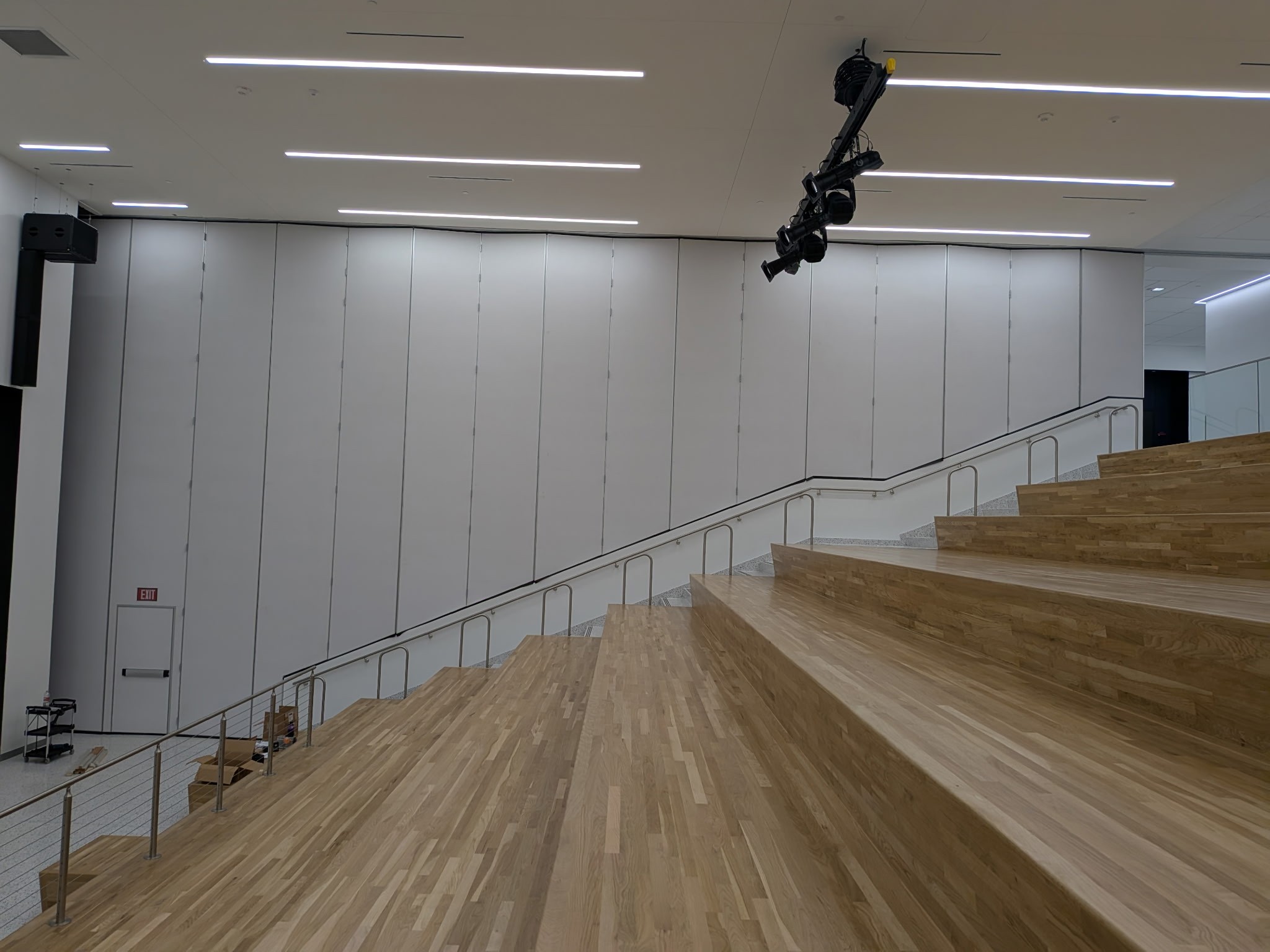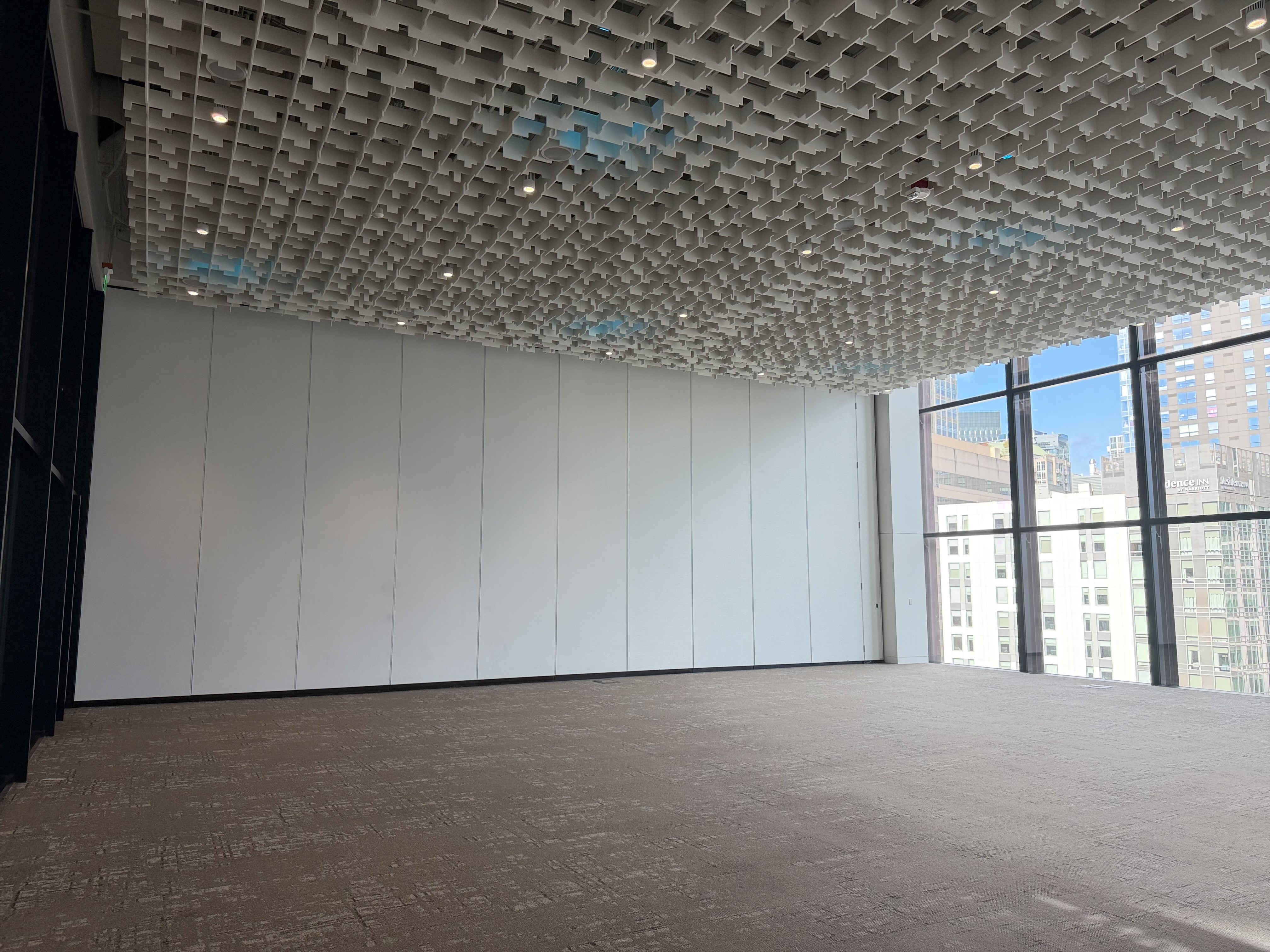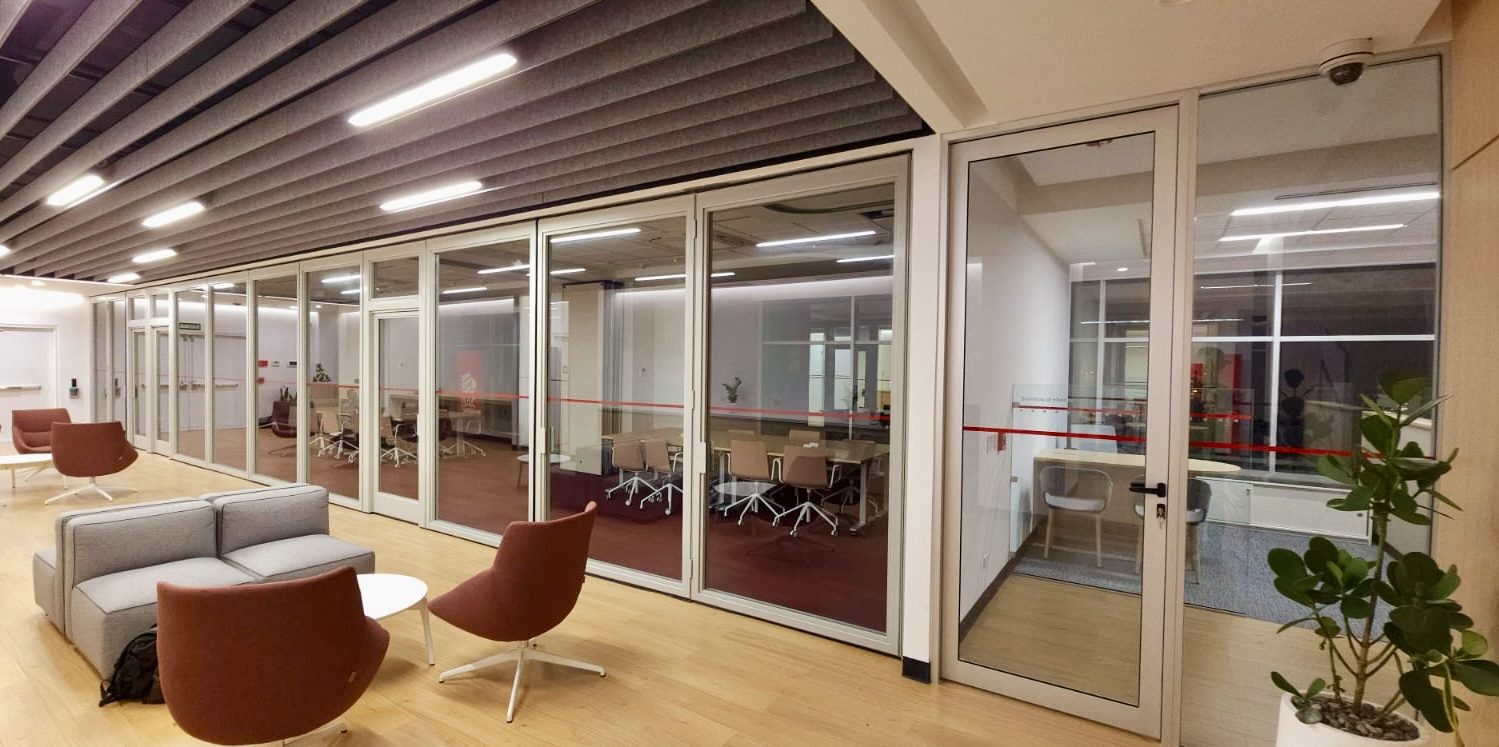

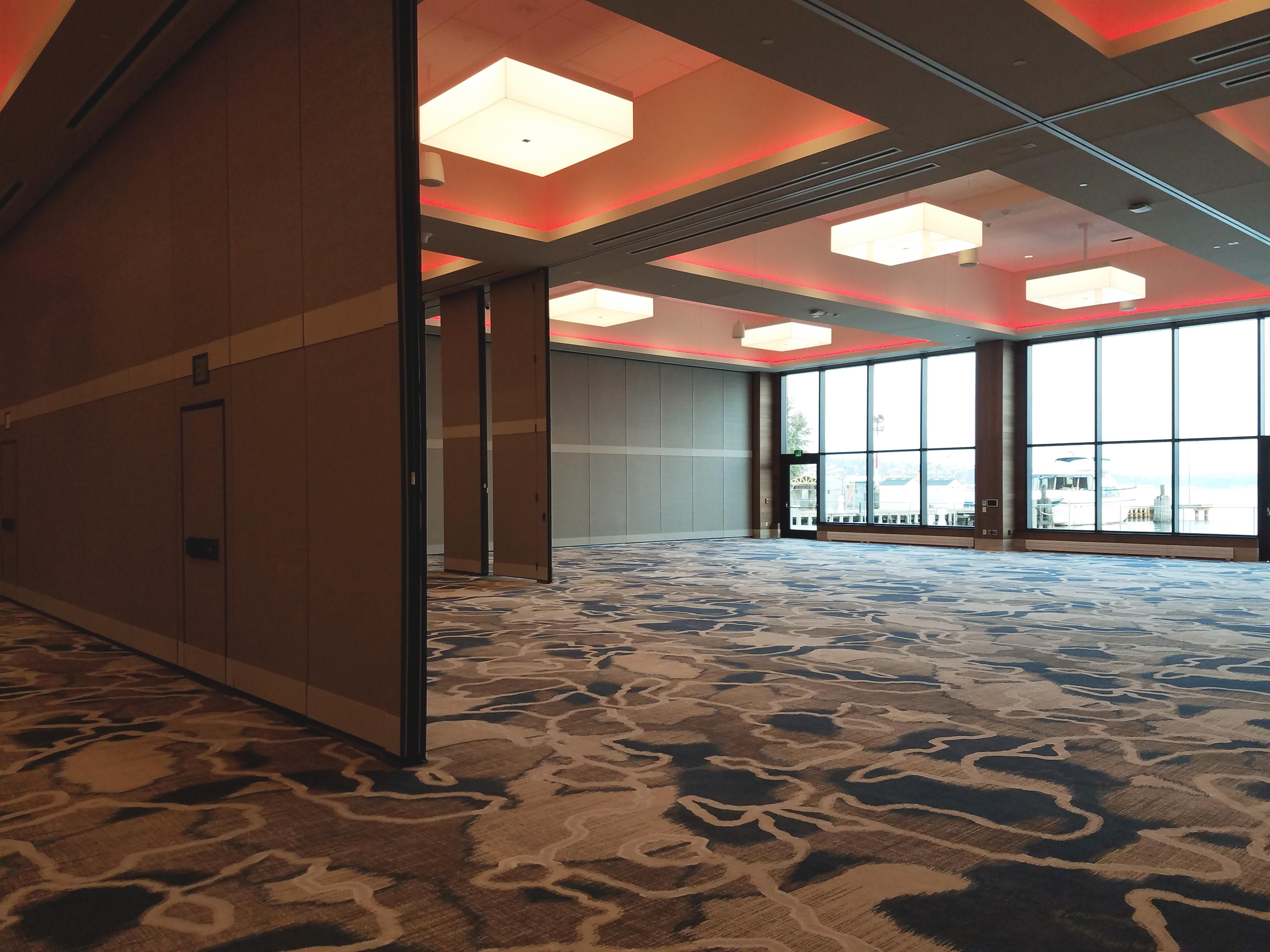
Ask anyone about an operable wall and they will describe the panels. But the system that actually runs the room is overhead: the track. It carries the wall's full weight, defines every layout the space can make, and determines whether setup takes minutes or an afternoon. Here is how operable partition track systems work and what to settle early in a project.
Top-hung: the weight rides overhead
Advanced Equipment systems are top-hung: panels hang from trolleys running in an overhead track, and the structure above — not the floor — carries the load. The floor stays clean and uninterrupted, which is exactly what banquet rooms, gymnasiums, and exhibition halls need. It also means the supporting structure has to be planned with the wall, so bring the track layout into the project early.
How panels move along it
Manual systems move panels by hand in two basic ways. Paired panels are hinged in groups of two and move together in a straight line — a two-for-one that dramatically cuts setup time and labor. Individual panels ride independently, so any panel can travel to any position along the track for maximum layout flexibility. Both approaches use the same all-steel panel construction; the difference is how the trolleys and track choreograph the movement.
Electric drive and automation
Electric systems put the drive in the system instead of the staff. Continuously hinged electric walls drive the entire line of panels along the track automatically, setting up large rooms in a fraction of the time. At the top of the range, Spacematic® automation moves individual panels to virtually any configuration required — and supports remote storage, sending panels away to a storage area entirely outside the room, as installed across 186,000+ square feet at the Jacob Javits Convention Center.
Curved track: when the room is not a rectangle
Advanced Equipment is the only manufacturer with true curved track and curved steel panels, letting an operable wall follow a radius instead of approximating it with straight segments. If the architecture bends, the wall can bend with it.
Where the wall goes when the room opens
Track layout decides where panels stack when the wall is open — at the end of the run, in a dedicated pocket, or with automated systems, in a remote storage area out of sight. Pocket doors conceal the stacked wall completely, so an open ballroom shows architecture, not hardware.
The documentation is public
Every Advanced Equipment track system is published: installation and operation manuals for each numbered track system in manual and electric variants, plus AutoCAD track and hardware detail drawings, are downloadable in the document library. Specifiers can pull what they need without waiting on a sales call.