
Every Advanced Equipment operable wall starts from the same platform: all-welded, all-steel panel construction with field-tested NIC 42 under ASTM E 336, laboratory ratings to STC 54, and limited panel warranties up to 20 years. The manual-versus-electric decision is not about quality — it is about operations. Here is how to think it through.
The case for manual
Manual systems have been the workhorse of flexible space for over 60 years, and for good reasons: no electrical infrastructure to install or maintain, the lowest total cost of ownership, fewer moving parts, and immediate operation — staff reconfigure the room the moment it is needed.
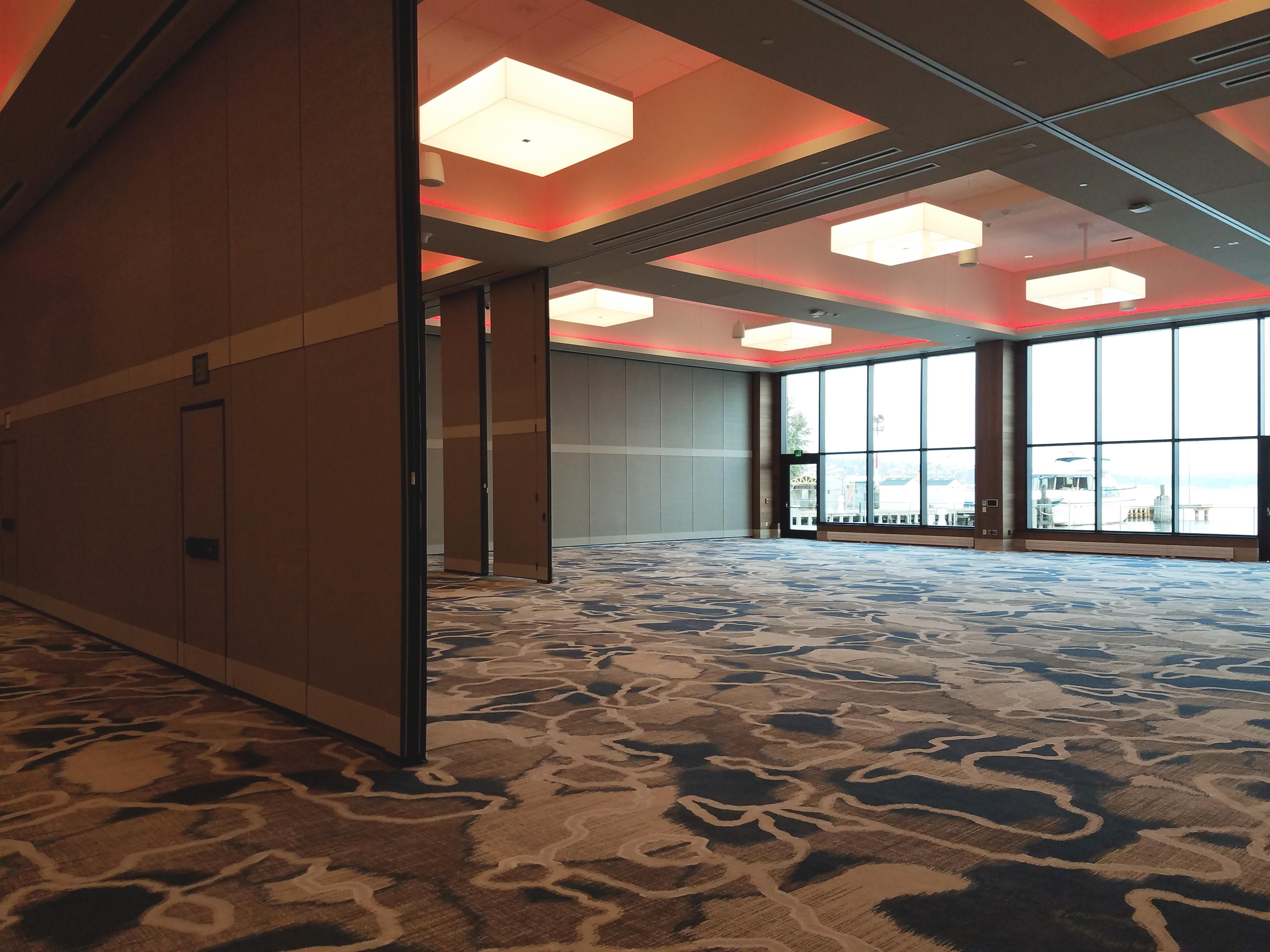
Two manual configurations cover most projects. Individual panels move independently for maximum layout flexibility, with customized remote storage keeping panels out of sight. Paired panels hinge two panels together so each move sets two panels at once — cutting setup moves in half, which is why busy ballrooms and convention floors favor them. The Yucatan Convention Center runs 30,270 square feet of manual partitions with remote storage and pocket doors on exactly this logic.
The case for electric
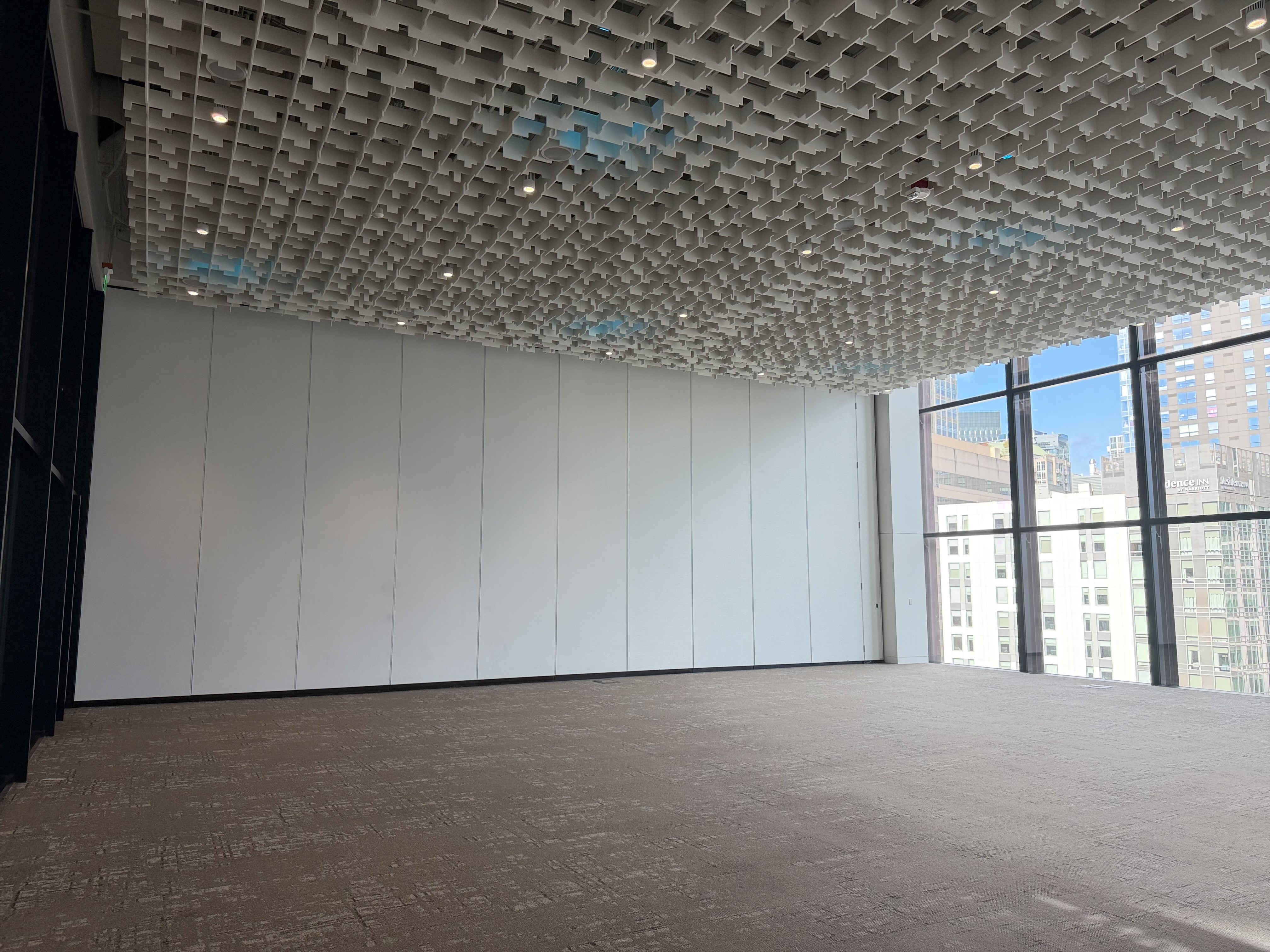
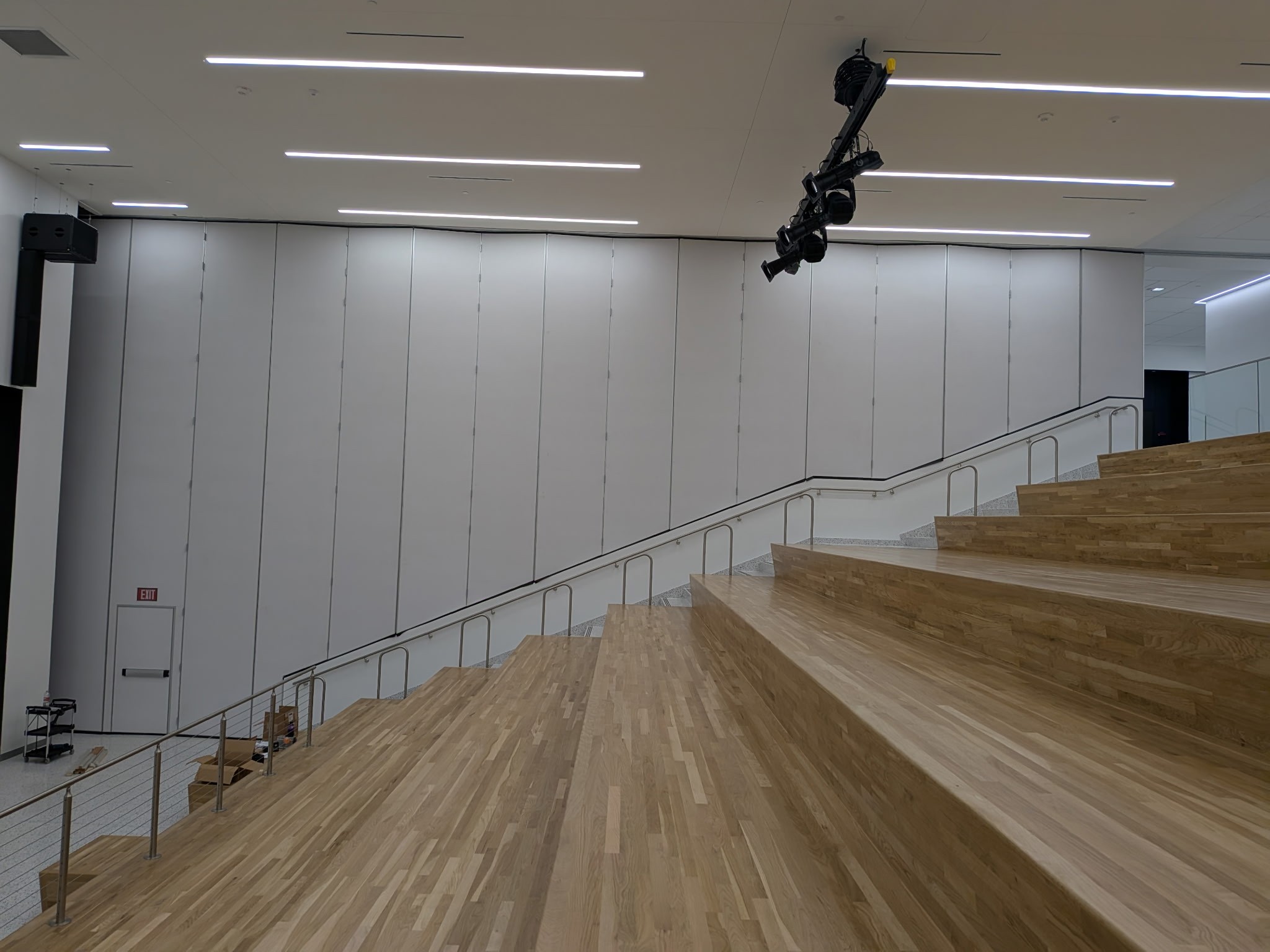
Electric systems earn their premium wherever rooms turn over frequently or panels are simply too large to handle. Continuously hinged electric walls travel automatically along the track under electric motor drive — one person, one key-turn or button. At Queens University's Levine Center, electric drive moves ALPHA 'U' panels up to 43 feet tall — walls no crew should move by hand.
Spacematic®, our patented automation system, moves individual panels automatically to virtually any configuration with just a two-person crew — the reason facilities like the Jacob Javits Convention Center and Cal Poly San Luis Obispo specified it for spaces that reconfigure constantly.
Five questions that decide it
- How often does the room change? Daily or multiple times daily favors electric; weekly or less favors manual.
- How big are the panels? Heights beyond comfortable manual handling (and up to 60 ft with Supertrack®) point to electric drive.
- Who operates the wall? Trained facility crews handle manual systems well; rotating or minimal staff benefit from single-person electric operation.
- What does downtime cost? Venues selling back-to-back events recover electric's premium through faster turnovers.
- What is the lifetime budget? Manual wins on installed cost and upkeep; electric wins on labor per reconfiguration.
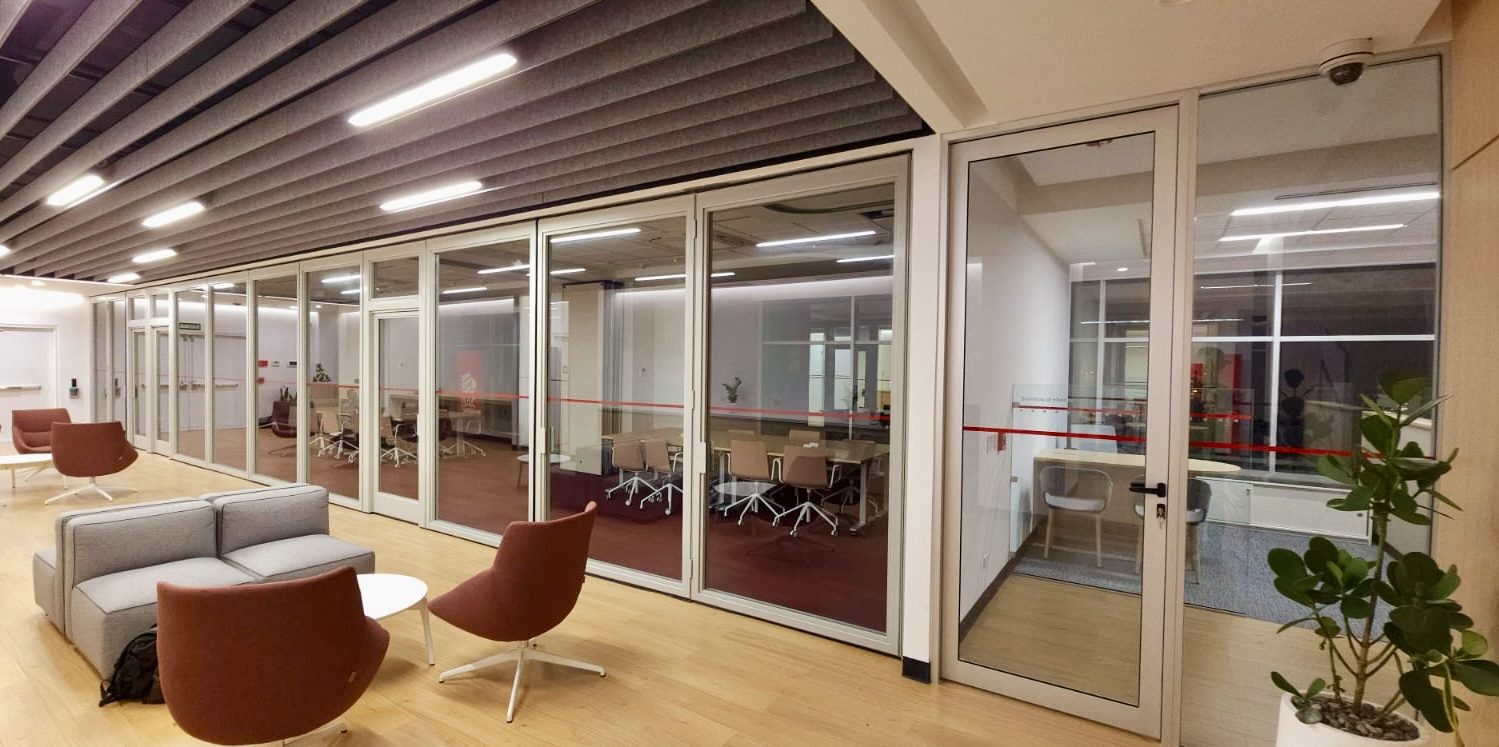
Many buildings mix both — electric on the big hall, manual on breakout rooms — as Sartori Elementary and the Costa Rica Convention Center both do. Tell us how your spaces work and we'll recommend the split: request a quote or explore manual and electric systems in depth.